No results
Try another keyword
Search for brands, model, category and more...
Loading...
Loved by 10,000+ Happy Golfers
We’ve engineered the GolfBays Lux Golf Simulator Hitting Enclosure for golfers who want it all: performance, durability, and a simulator that looks the part. It’s ideal for commercial and high-end home setups, with sturdy aluminium framing, our crisp Pro+ impact screen, and a sound-dampening quilted surround. Choose from the options below to transform your space into the ultimate golf getaway.
Garden: go portable for shared spaces or a cage for year-round hitting and driving. Garage: choose a compact or return net with low bounce-back. Indoors: pick an indoor-safe return net or compact cage, pair with a short-pile mat, and add other accessories to prioritise noise control.
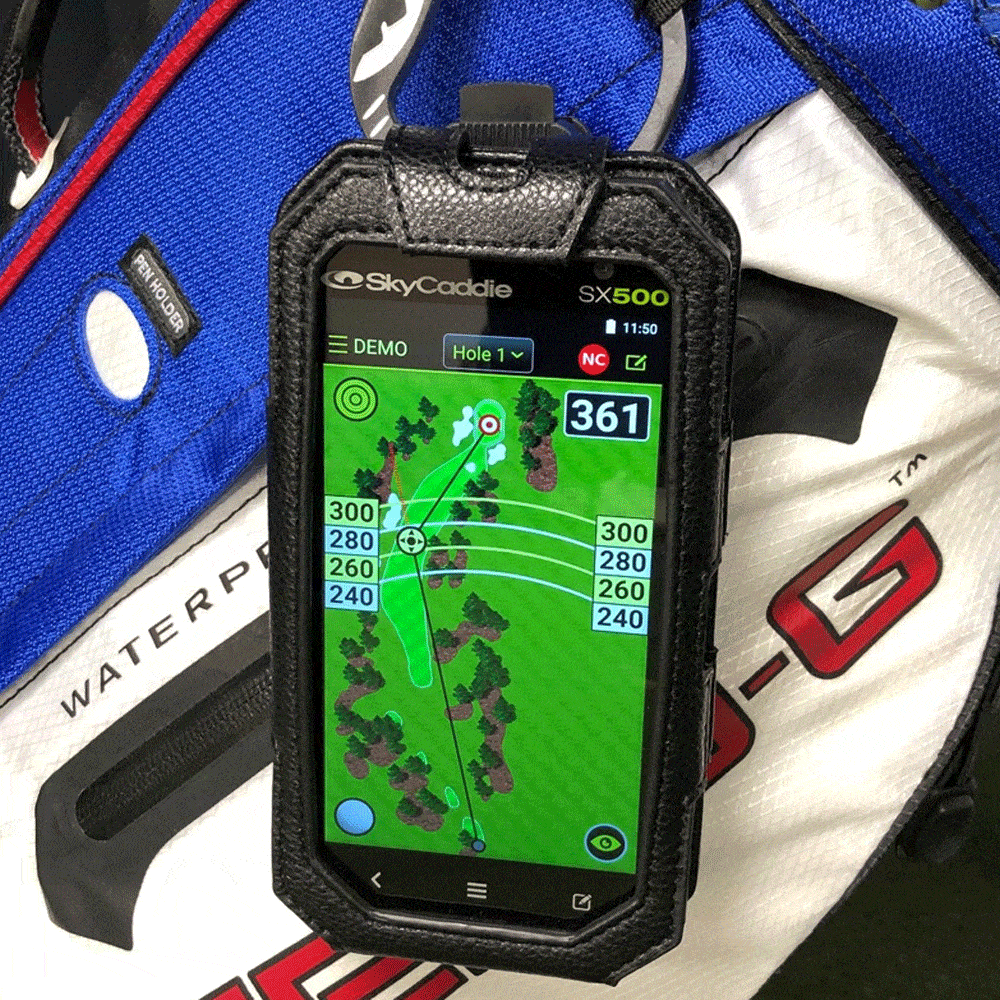
Start with a hitting mat (comfort + realistic strike), add a ball tray to keep your sessions in rhythm, and consider side barriers/roof if space is tight. A phone holder or portable launch monitor turns the setup into a feedback station.
Follow the individual product guidance, but as a general rule, stand about 2m back for irons/wedges and a touch further when hitting your driver. If you’re getting bounce-back, increase the distance slightly or reduce the net’s tension.
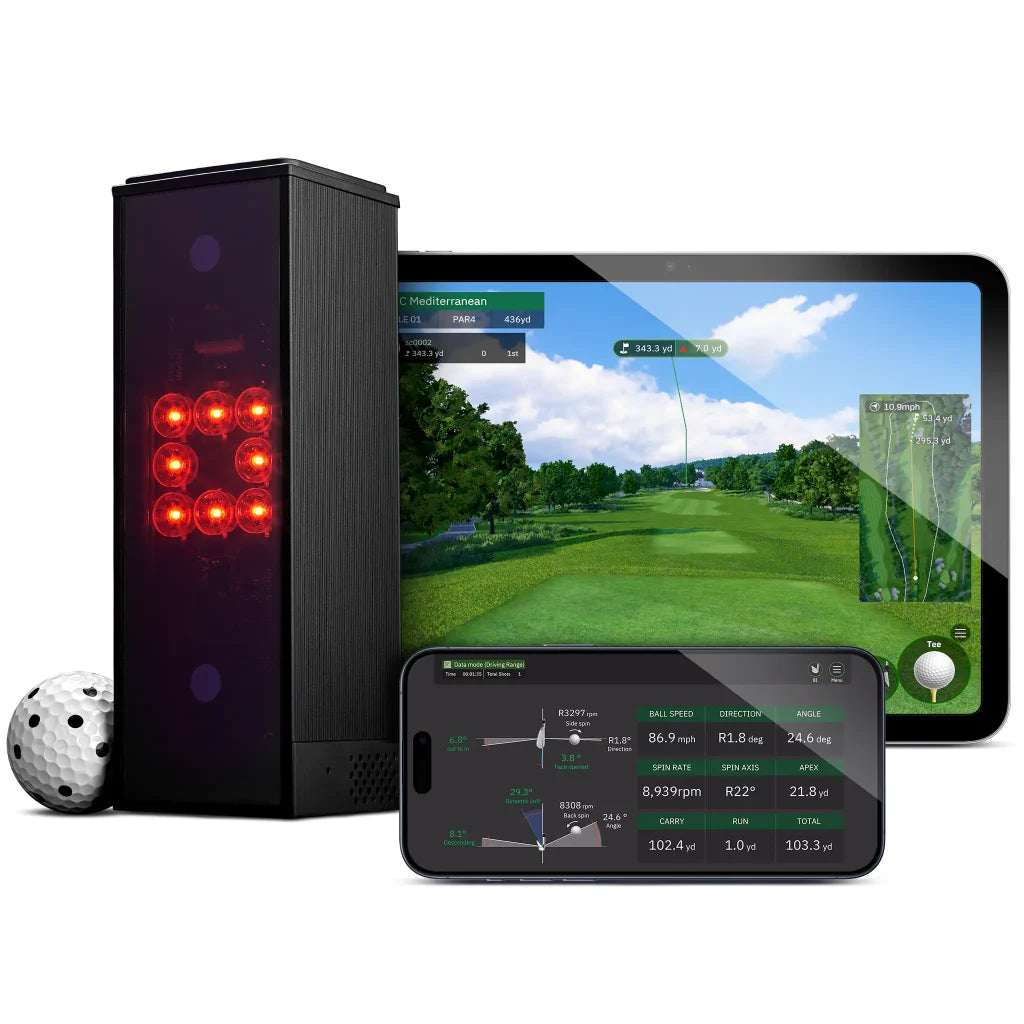
Absolutely yes. This is because a golf net makes consistent practice easy and inexpensive compared to visiting your local range. Net sessions also remove ball-flight drama so you can groove your swing mechanics (tempo, start line, low point) without focusing on where the ball is going. You can always add a launch monitor to track ball speed, spin and carry for a proper data-driven training routine at home.
Most outdoor setups are durable and designed to be semi-permanent, so you can leave them outside exposed to the elements. But you’ll extend the life of any net by drying and storing it after use. For permanent garden set-ups, look for UV-resistant mesh and a weather-resistant frame, use stakes/sandbags if it’s windy, and inspect clips/ties/anchors periodically to make sure their condition is safe and secure.
Keeping the volume down starts with a well-set net at an appropriate tension. You can also use a return panel or target sheet to further dampen sound. Avoid over-tightening the mesh, add a soft backing layer behind the strike zone, and hit off a cushioned mat. All these steps will help you keep things quiet.
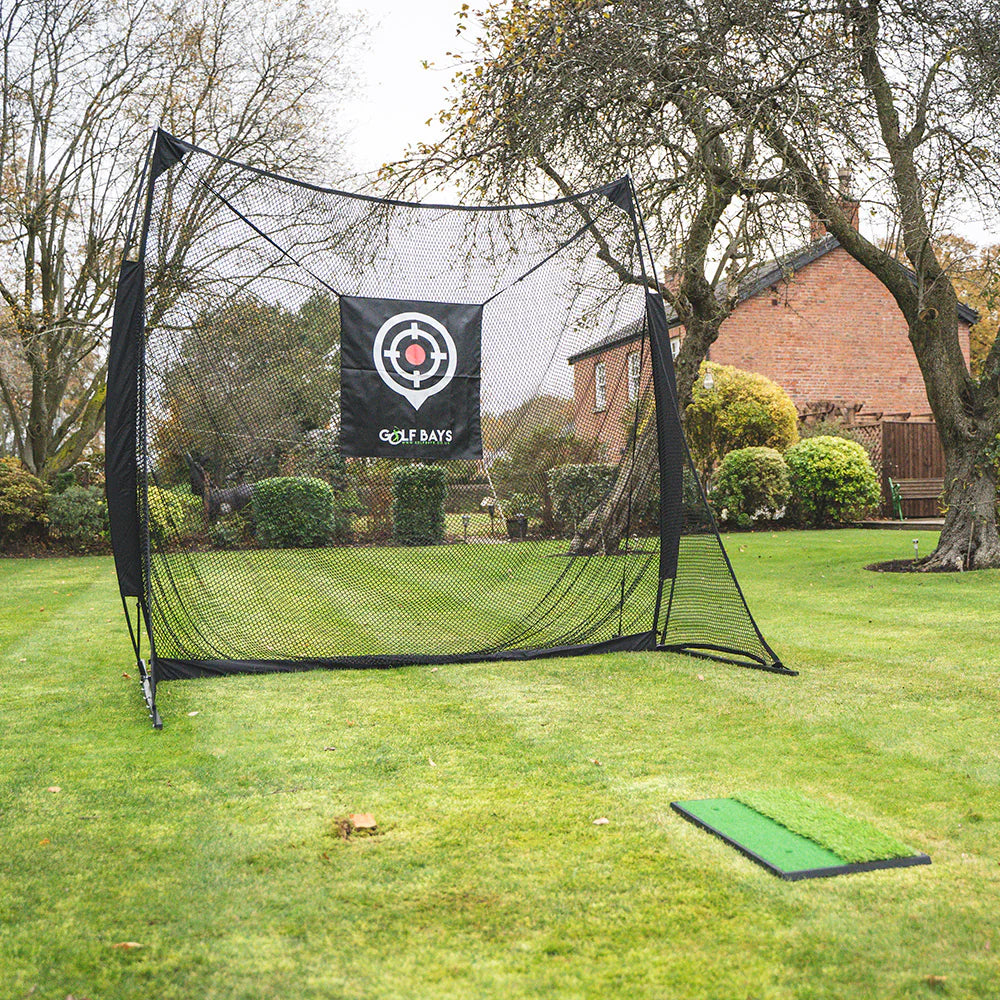
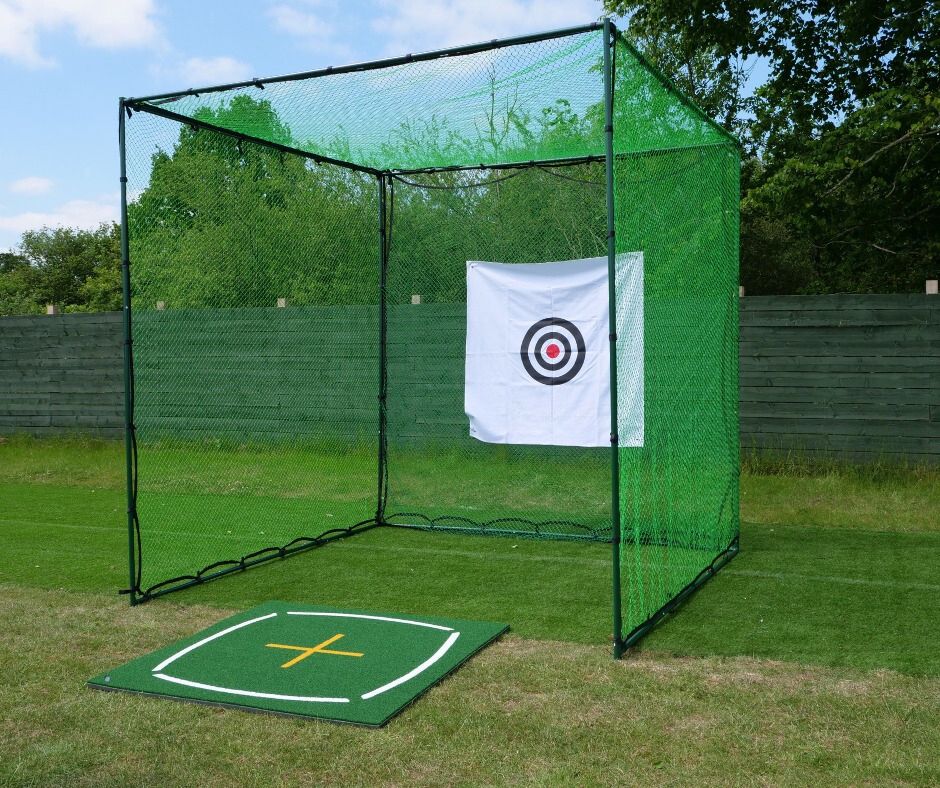
Think of a portable/pop-up golf net as the fastest set-up for small spaces. Ball-return nets with a built-in ramp/sheet work by rolling the ball back to your feet for rapid reps. A golf cage typically has a deeper frame with side/roof protection for full-speed driver work and maximum confidence that you’re not going to smash any windows.
Start by choosing a net with as much depth as possible for your space. Then, set firm but not drum-tight tension. Next, stand the recommended distance from the net. Finally, you can add side wings and a secondary catching layer to further deaden speed and sound and add extra peace of mind for wayward shots.
Absolutely. All of our garden and indoor golf nets are built for use with real balls. You can also pair them with a quality hitting mat to protect wrists and floors, stand the recommended distance from the net, and keep the mesh/target correctly tensioned to minimise rebound.
Aim for a mouth/opening that comfortably catches your biggest miss and full-loft wedges. For most homes, a 2-3 m wide pop-up is fine for irons. Step up to a 3m x 3m golf cage if you’ll hit lots of drivers or want peace of mind and extra side/roof protection. For garages and other indoor practice setups, measure your ceiling height first and be sure to leave safe clearance behind the net.